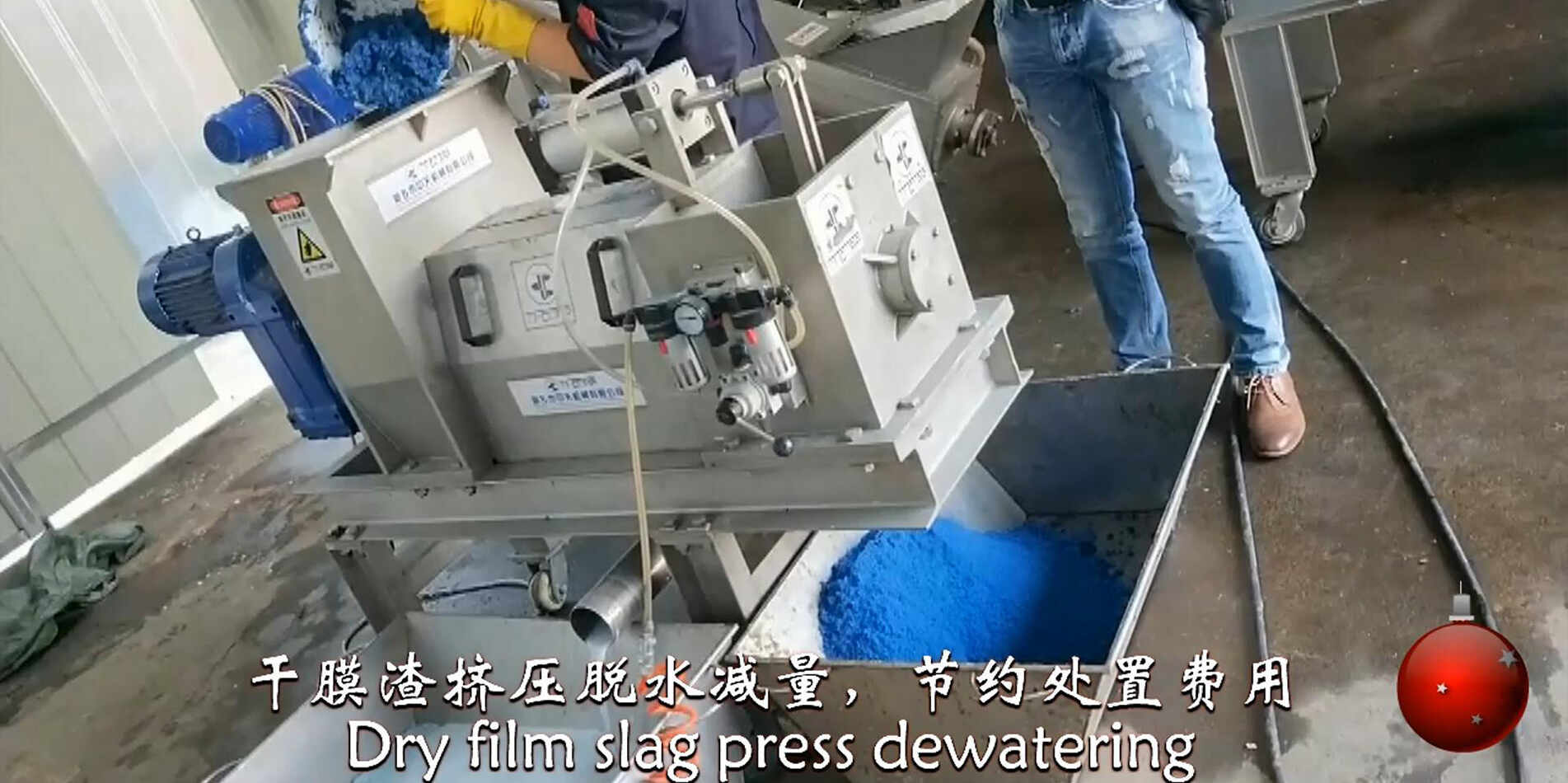
Hazardous waste dewatering and reduction:
In some hazardous wastes, the useful substances contained are easier to separate and recover after dehydration. For example, for hazardous waste solutions containing metal ions, the concentration of metal ions is relatively increased after dehydration by a screw extrusion dehydrator, making it easier to use appropriate technologies for metal recovery and utilization, realizing the resource-based treatment of hazardous waste, and reducing resource waste and environmental pollution.
Paint residue dehydration and reduction:
After being processed by a screw press, the moisture content of the paint residue can be reduced from a relatively high initial level (e.g., 70-80%) to about 65%. The specific dehydration rate will vary depending on the properties of the paint residue (e.g., the type of paint, impurity content, etc.) and the parameters of the screw press equipment (e.g., screw shaft speed, screen aperture, etc.).
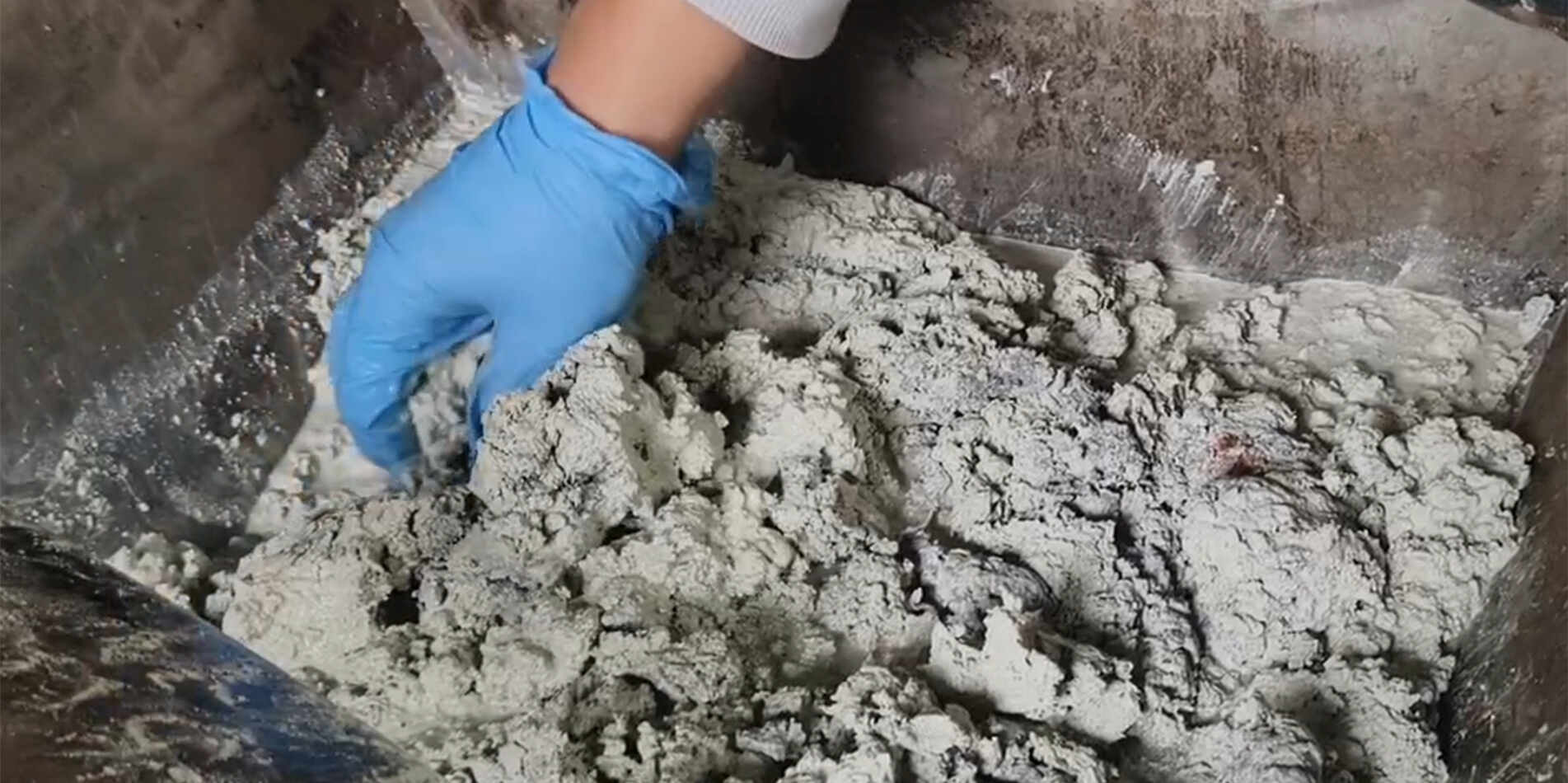
Dry film residue solid-liquid separation:
Screw press dewatering machines can effectively reduce the weight of dried film residue by 40% to 70%. They are adaptable to different types and properties of dried film residue. Regardless of its source or composition, good solid-liquid separation can be achieved by adjusting equipment parameters (such as screw speed and extrusion pressure).